
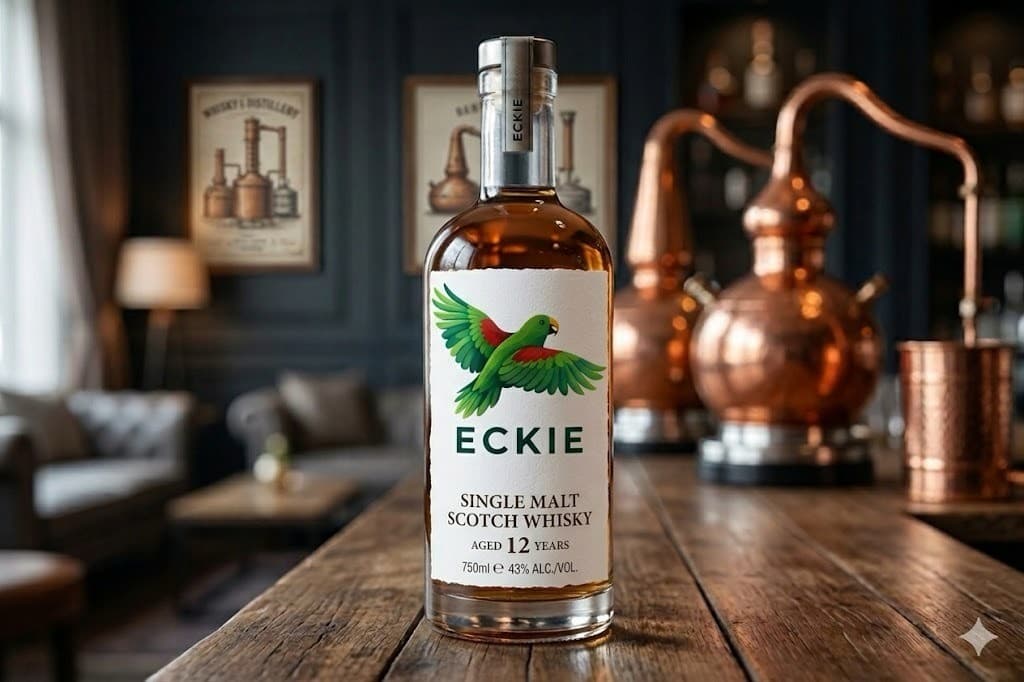
Eckie Australia
Whiskey
Single malt whisky is defined by two essentials: one distillery, and malted barley alone. Below is a concise guide to how it is made, what defines quality, and why it sits at the top of the premium spirits category worldwide.
What is Single Malt Whisky?
Single Malt Whisky is a premium category of whisky defined by two critical parameters: it is produced at a single distillery and made exclusively from malted barley. Unlike blended whiskies, which combine spirits from multiple distilleries and grain types, single malt whisky represents a pure and controlled expression of one production system, one location, and one set of raw materials.
The term “single” refers to a single distillery—not a single batch—while “malt” indicates that the whisky is produced using only malted barley as the fermentable grain. This definition is globally recognised and forms the basis for premium positioning in international markets.
Single malt whisky is widely regarded as a benchmark for craftsmanship, traceability, and flavour complexity in the distilled spirits industry.
Historical Background of Single Malt Whisky
The origins of single malt whisky trace back several centuries, particularly to regions such as Scotland and Ireland, where distillation techniques evolved from monastic and medicinal practices into refined beverage production.
Early whisky production was largely unregulated and localised, with distillers using available grains and simple pot stills. Over time, technological advancements—particularly the development of copper pot stills and controlled maturation techniques—transformed whisky into a sophisticated product.
In the 19th century, the introduction of continuous column stills enabled mass production of grain whisky, leading to the rise of blended whisky. However, single malt whisky retained its status as a premium, artisanal product, valued for its authenticity and depth.
Today, single malt whisky is produced globally, including in regions such as Tasmania, which has emerged as a high-quality production zone due to its natural advantages.
Raw Materials Required for Single Malt Whisky
The quality of single malt whisky is fundamentally determined by its raw materials. Only a limited number of inputs are used, making their purity and characteristics critically important.
1. Malted Barley
Malted barley is the sole grain used in single malt whisky production.
- Barley is soaked, germinated, and kiln-dried to convert starch into fermentable sugars
- High starch content improves alcohol yield
- Uniform grain size ensures consistent processing
- Low protein content enhances clarity and flavour
- The origin of barley significantly impacts flavour development, with cooler climates typically producing superior malting quality
2. Water
Water plays multiple roles in whisky production: mashing (extracting sugars from malted barley), fermentation, and dilution before bottling.
High-quality water should have low levels of dissolved impurities, a balanced mineral composition, and neutral sensory characteristics. Regions with naturally pure water sources have a significant advantage in whisky production.
3. Yeast
Yeast is responsible for converting sugars into alcohol during fermentation.
- Selected strains influence flavour compounds (esters, alcohols)
- Fermentation efficiency affects yield and consistency
- Though often overlooked, yeast contributes significantly to the whisky’s aromatic profile
Production Process of Single Malt Whisky
Single malt whisky production involves a sequence of controlled steps, each contributing to final product quality.
Malting
Barley is germinated to activate enzymes, then dried to halt growth while preserving enzymatic activity.
Mashing
Malted barley is mixed with hot water to extract fermentable sugars, producing a liquid known as “wort.”
Fermentation
Yeast is added to convert sugars into alcohol, producing a low-alcohol liquid called “wash.”
Distillation
The wash is distilled—typically twice—in copper pot stills, which:
- Remove impurities
- Concentrate alcohol
- Enhance flavour complexity
Maturation
The distilled spirit is aged in oak casks, often for several years.
- Interaction with wood develops flavour, colour, and aroma
- Environmental conditions influence maturation rate
Bottling
The matured whisky is diluted (if required), filtered, and bottled for distribution.
Quality Parameters of Single Malt Whisky
High-quality single malt whisky is defined by multiple technical and sensory factors:
Raw Material Quality
- Premium barley with high extract potential
- Clean, pure water
- Controlled yeast strains
Process Control
- Consistent fermentation conditions
- Precise distillation cut points
- Controlled maturation environment
Maturation Time
- Longer ageing generally enhances complexity
- Balanced maturation prevents over-oaking
Sensory Consistency
- Reproducible aroma and flavour profile
- Absence of off-notes or harshness
Taste and Aroma Characteristics
Single malt whisky is known for its complex and layered sensory profile, which distinguishes it from other spirits.
Aroma (Nose)
Common aromatic notes include:
- Malt and grain sweetness
- Vanilla and caramel (from oak)
- Fruit notes (apple, pear, dried fruits)
- Spice and toasted wood
Taste (Palate)
- Full-bodied and structured
- Balanced sweetness and bitterness
- Flavour evolution across the palate
Finish
- Long and lingering
- Warm and smooth
- Often reveals secondary notes such as spice or smoke
Variation
The exact profile varies depending on raw materials, distillation methods, and maturation conditions.
Influence of Geography and Terroir
The concept of “terroir” is increasingly relevant in whisky production.
Climate
- Cooler climates → slower maturation, refined flavours
- Warmer climates → faster ageing, intensified wood interaction
Water Source
- Mineral composition influences mouthfeel
- Purity affects overall clarity
Local Raw Materials
- Regional barley characteristics impact flavour
- Environmental purity ensures cleaner spirits
Regions like Tasmania
Regions like Tasmania are gaining recognition due to:
- High-quality barley production
- Pure water sources
- Clean, low-pollution environment
Advantages of Single Malt Whisky
Single malt whisky offers several advantages over blended or grain-based alternatives:
Authenticity
- Produced at a single distillery
- Fully traceable origin
Quality Control
- Greater control over raw materials and process
- Consistent product standards
Complexity
- Rich and layered flavour profiles
- Enhanced sensory experience
Premium Positioning
- Recognised globally as a high-end product
- Strong demand in international markets
Market Relevance and Global Demand
Single malt whisky has seen significant global growth due to increasing consumer preference for premium products, demand for authentic, origin-based brands, and expansion into new markets beyond traditional regions.
It is widely consumed in Europe, North America, and Asia-Pacific. Emerging producers, particularly in regions like Australia, are gaining market share due to quality innovation.
Why Single Malt Matters
Single malt whisky represents the highest level of precision, craftsmanship, and raw material integrity in the distilled spirits industry. Defined by its use of malted barley and production at a single distillery, it delivers unmatched authenticity and complexity.
From carefully selected barley and pure water to controlled fermentation, copper pot distillation, and long-term maturation, every stage contributes to the final product’s quality. The result is a spirit with rich aroma, balanced flavour, and a long, refined finish.
As global demand continues to grow, single malt whisky remains a cornerstone of premium spirits, valued for its heritage, technical excellence, and sensory sophistication.
For producers and consumers alike, it is not just a drink—it is a product of science, environment, and time.